Fluid Drainage Procedures
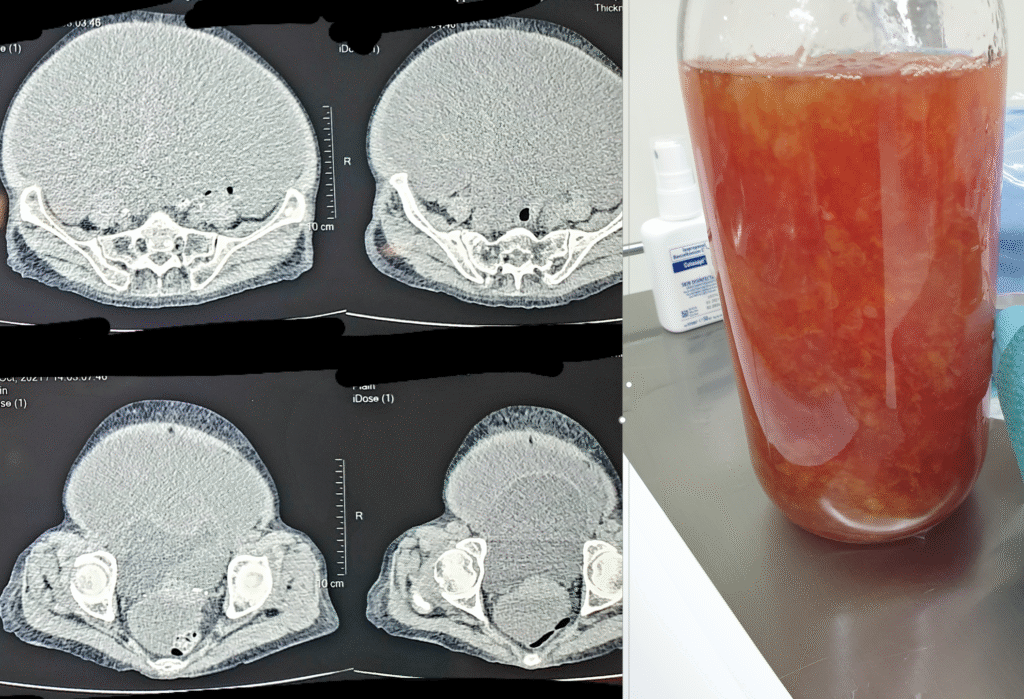
This information sheet explains procedures used to drain excess fluid from body cavities. This may involve a simple needle aspiration (Thoracentesis / Paracentesis) or the placement of a flexible tube called a Pigtail Catheter for continued drainage.
What is the Procedure?
| Procedure | What is Being Drained? | Where is it Located? | Reason for Drainage |
| Thoracentesis | Pleural Effusion (Fluid around the lung) | The pleural space (between the lung and chest wall). | Shortness of breath, infection, or diagnosis of cancer/other disease. |
| Paracentesis | Ascites (Fluid in the abdomen) | The peritoneal cavity (the abdominal space). | Abdominal pain, bloating, or diagnosis of infection (Peritonitis) / liver disease. |
| Pigtail Catheter Placement | Pleural or Peritoneal Fluid (or an abscess) | A small, flexible tube with a curled tip (pigtail) is left in the cavity for continuous or repeated drainage. | Used when a large amount of fluid needs to be drained slowly, or the fluid is expected to quickly reaccumulate. |
Benefits of the Procedure
These procedures are performed for both Diagnosis (to find the cause of the fluid) and Treatment (to relieve symptoms).
| Benefit | Description |
| Rapid Symptom Relief | Removing fluid immediately relieves uncomfortable pressure, easing shortness of breath and abdominal discomfort/bloating. |
| Diagnosis | Fluid analysis is crucial for determining the underlying cause (e.g., cancer cells, infection/bacteria, or organ failure). |
| Less Invasive Option | Pigtail catheter placement is generally less painful and less invasive than inserting a traditional large-bore chest tube, improving patient mobility and comfort. |
Risks and Potential Complications
While generally safe, all procedures carry risks. Serious complications are rare, especially when the procedure is performed with ultrasound guidance. The percentages reflect findings from various medical studies.
Risks Specific to Thoracentesis and Pigtail Catheter (Chest)
| Complication | Likelihood (Approximate) | Description |
| Pneumothorax (Collapsed Lung) | 2% to 6% (Insertion Risk) | The needle/catheter creates a small hole, allowing air to leak into the chest cavity. This is the most common serious complication and may require a new chest tube to resolve. |
| Catheter Blockage or Kinking (Pigtail Only) | 3% to 20% (Usage Risk) | The small tube can get blocked by thick fluid (viscid) or fibrin/clots, preventing effective drainage. |
| Re-expansion Pulmonary Edema | Rare: 0.2% to 0.5% | Fluid buildup inside the lung itself if a very large volume is removed too rapidly. |
| Bleeding/Hemothorax (Blood in the chest) | < 1% | Bleeding at the insertion site or internally if a blood vessel is injured. |
Risks Specific to Paracentesis and Pigtail Catheter (Abdomen)
| Complication | Likelihood (Approximate) | Description |
| Fluid Leakage | 3% to 13% | Ascitic fluid may continue to leak from the puncture site after the procedure or after the pigtail is removed. This usually stops on its own. |
| Bowel or Organ Puncture | < 1% (Less than 1 in 1,000) | Accidental injury to the intestine, bladder, or blood vessels. This is extremely rare with ultrasound guidance. |
| Bleeding/Hematoma | 0% to 2.7% | Bleeding at the insertion site or inside the abdominal wall. Risk is higher in patients with severe liver disease. |
| Low Blood Pressure (Hypotension) | Low risk | Can occur after removing a very large volume of fluid (Large Volume Paracentesis). This is prevented by slow drainage or administering intravenous fluids/albumin. |
What to Expect
- Preparation: You will change into a gown. Your doctor will use ultrasound (or sometimes CT) to locate the fluid and plan the safest insertion path, avoiding vital organs and blood vessels.
- Positioning: You will be positioned to allow the fluid to pool in the safest, lowest area (usually sitting up for thoracentesis, or lying on your back for paracentesis).
- Procedure: The site will be thoroughly cleaned, and a local anesthetic will be injected to numb the area. A very small incision is made, and the needle/catheter is inserted using imaging guidance.
- Pigtail Catheter Care: If a pigtail catheter is placed, it is secured to your skin with a stitch or adhesive dressing. A drainage bag is attached. You will be given specific instructions on how to care for the site and drain the fluid at home.
- Afterward: You will be monitored for a short period. A Chest X-ray is typically done after a thoracentesis to confirm the lung is fully expanded.
When to Call Your Doctor or Seek Emergency Care
Call your healthcare provider immediately or go to the Emergency Room if you experience any of the following:
- Fever (100.4°F or 38°C or higher) or chills.
- New or worsening shortness of breath or severe chest pain (especially after thoracentesis).
- Signs of infection at the site: redness, warmth, increasing pain, or pus-like drainage.
- Catheter Problems (for Pigtail): The catheter falls out (dislodgment), the fluid suddenly stops draining, or you notice a large amount of new leakage around the catheter site.
- Severe or uncontrolled abdominal pain or bleeding.
(Disclaimer: This sheet is for informational purposes only. It is not a substitute for professional medical advice. Please discuss your specific condition, risks, and benefits with your healthcare provider.)
Sources
RadiologyInfo.org. (2021). Abscess Drainage, Percutaneous. A public information resource developed and maintained by the Radiological Society of North America (RSNA) and the American College of Radiology (ACR).
- StatPearls. (2025). Percutaneous Abscess Drainage. National Center for Biotechnology Information (NCBI) Bookshelf.
- British Society of Interventional Radiology (BSIR) Patient Information Leaflet. Percutaneous Drainage. (Used for general description and risk profile).